Real Time Inventory Tracking: Stop Losing Stock In The Dark
- Feb 23, 2026

When inventory goes missing, your business does not usually lose it in the back of the warehouse. You lose it on paper first. A count is off by twenty units. A pallet is received in the wrong location. An item is picked without being scanned. Then a customer places an order, your system says there is stock, and the picker finds an empty shelf. That is how a simple inventory miss turns into backorders, cancellations, and long customer support threads. The common thread in all of these situations is the same. You did not have real time inventory tracking.
Research shows that merchants are moving away from any 3PL arrangement that hides what is happening to their inventory. It is not enough to know how many units you had at the start of the week. You need to know what you have right now. When inbound loads are checked in, when pallets are moved, when units are picked, and when returns land in the building, every event should immediately update the source of truth. Without that, your forecast is a story, not a fact.
Many brands decide to switch providers after learning that their old 3PL could not keep inventory straight. Some find that items they thought were available were never actually received. Others discover that slow manual processes created gaps between real count and system count. All of them come out of that experience looking for clear, real time inventory tracking so they can stop guessing and start acting.
As Maureen Milligan said, "Most of the customers who come to us from another 3PL, their challenges have always been access to their data, order accuracy and efficiency, and basically just meeting the committed requirements. So we've seen a lot of people come disillusioned by their last 3PL, where their orders weren't getting fulfilled in time, their inventory accuracy was not there, and they were not able to satisfy customer orders."
Real time inventory tracking is not just a nicer report. It is a different way to think about how your product moves through space. Instead of treating inventory as a static number that changes once a day, it treats every touch as a data point. When the truck hits the dock, that is an event. When a pallet moves to overstock, that is an event. When a tote gets loaded for picking, that is an event. Each event updates reality in the system.
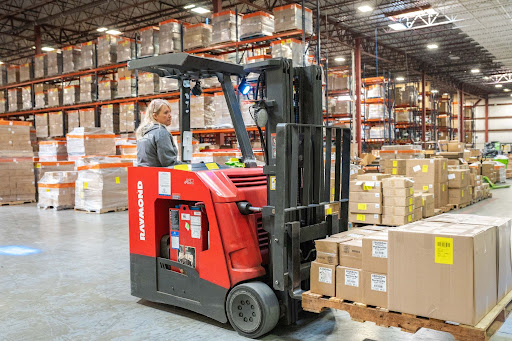
Bryan Wright drew a sharp line between weak and strong systems when he said, "A bad WMS system will not track inventory 100%, as it should. A good WMS tracks inventory through the warehouse at every point that you touch it." He also said, "Well, good. WMS will tell you, 'Okay, I've received the product at the dock, so there's a location called dock, and then I've put it on a pallet, and now it's sitting on a pallet in a location called dock, and now I've picked it up with a fork truck, and now it's sitting on a fork truck called fork 10, and that product's riding to the location.' So at any point in time, I know that Bobby has this product on fork 10 right now, and if I needed to go find that product, I just got to go find Bobby on fork 10."
That is what real time inventory tracking looks like when it is working. You know where the product is, who last touched it, and how it got there. You do not have to run a manual hunt through the aisles. You do not have to hope that yesterday's spreadsheet is still correct. You follow the timestamps instead of chasing rumors.
It is not enough for the system to know what happened. You need to see it as well. Bryan also said, "Absolutely. We have portals that show you the data. We have history that shows you all of that tracking. It shows the product landed on the dock at 8 o'clock. At 8:10, John picked it up and took it to location XYZ, and at 10 o'clock, we picked two items off of that pellet in the location 1, 2, 3, 4, order, you know, ABC, and at 11 o'clock, we packed it, we put it in this box and put this label number on it, and all the way through the process onto the truck and to the customer."
Counting inventory once a quarter, or only when something breaks, is not enough for modern e-commerce. You need a live picture of what is on the shelf, what is committed to orders, what is coming in, and what is going out. That picture has to be built from real scans, not guesses. When everything is tracked as it happens, you are not surprised by shortfalls and you are not stuck explaining why your system said you had stock when you did not.
Connor Perkins put a spotlight on the technology and habits that support accurate tracking when he said, "You want everything to be scanned in the warehouse, nothing done on paper. You can lose a lot of money in this industry by you know having people ship stuff wrong, or store it wrong, and now it's lost somewhere. So having a 3PL and WMS that is 100% scan-based is crucial."
Real time inventory tracking is easier when the culture assumes that scanning is part of the job, not an extra step. If a product cannot move without a scan, then the system always knows where it went. That habit keeps the data honest. When people skip scans or rely on memory, the entire map of your inventory starts to blur at the edges.
Connor also talked about what happens when that discipline is missing. He said, "One of the pain points our clients have experienced with previous 3PLSs is inventory accuracy; maybe their previous 3PL wasn't great at picking the orders accurately. So they were losing money by shipping wrong items or wrong quantities of items. I think some have lost product due to storage practices."
Tracking data is only useful when you can see it and work with it. If information is locked away in a back end only your 3PL can touch, then you may as well still be in the dark. Real time inventory tracking has to show up in tools your team can actually use, especially when things get busy.
As Maureen said, "We're in the last stages of developing a new portal that will give customers real-time visibility to their on-time order fulfillment, inventory accuracy, and even inventory levels so that they can monitor those things directly in our systems. They'll have visibility to what the statuses of their orders-are they getting processed as they expect?-and things like that. So we do provide an awful lot of visibility already, but we are looking at providing a more up-to-date portal that provides an even broader range of feedback."
She also said, "A lot of the 3PL customer expectations are that order fulfillment is happening extremely timely, that our inventory is accurate, that we're able to execute on their orders very quickly, and get them shipped the same day. So what these real-time portals provide our customers is 100% visibility. A client might say, 'I had 100 orders come into the system before noon, we're going to fulfill and ship those out today.' And they now have direct visibility to watch that progression throughout the stages of the fulfillment process. They can then make sure that their orders are fulfilled and out the door without having to wait till we send them back a notification that the order is fulfilled." Then she added, "They can actually watch those progressions going on."
Connor described what that looks like from the WMS side when he said, "Our clients get best-in-class visibility and transparency. They can see their daily orders, they can see KPIs, and they can see historical transactions. They can look at a daily level or go into the more granular version where they're looking at transactional history on an item. In our WMS you know we have a reports portal where you can go in and view any reports that you've requested or any of our default reports (which cover all the basics that a potential partner would need). You have easy access to reporting and you can export to Excel, or really any format that you like you know directly from our WMS portal. It's a good source of truth. You can pick and choose what kind of visibility and what format you need it in, and do it all out of one place."
When a brand is small, people sometimes believe they can manage inventory with willpower and a few spreadsheets. As orders pick up, that approach starts to wobble. As retail channels are added and promotions get bigger, it fails completely. Real time inventory tracking becomes the safety net that stops success from turning into chaos.
Maureen described the difference that consistent execution can make when she said, "We will take in your inbounds, we will get them received and reported back to you within our SLAs, and oftentimes more quickly than what we contracted for. We will ship your orders out the day they're required. And our inventory accuracy is generally right there at that 99.7% that we agreed. So that's one of the areas where we really do excel, and where we've been able to win business."
Real time inventory tracking does not remove every surprise from the supply chain, but it does mean you see problems as soon as they appear. You know when inbound containers are running late. You know when a certain SKU is getting dangerously low. You know when demand in one channel is starting to crowd out another. Instead of learning about shortages from angry customers, you see them forming and can respond in time.
As Maureen also said, "For customers who have come to us from a bad 3PL relationship, they experience relief. They're suddenly seeing their business scaling, that the data supports what we agreed to, and then the trust begins to build."
Real time inventory tracking is no longer a luxury reserved for the biggest brands. It is the baseline for anyone who wants to sell across channels without losing control of their operation. When you can see every movement, every receipt, every pick, and every adjustment as it happens, you are not at the mercy of surprises. You can make decisions based on what is actually true in your warehouse right now.
If your current provider leaves you guessing where your inventory really is, it may be time to move to a 3PL that treats visibility as a core requirement instead of a line item on a brochure. As Connor said, "This is one of our strengths. G10 is on the cutting edge for this kind of transparency and feedback for clients."
If you are ready to stop losing stock in the dark and start running with real time inventory tracking, it is worth seeing how this level of visibility feels in practice. When your system shows you the truth instead of a lagging summary, inventory stops being a mystery and starts being something you can actually control.
Transform your fulfillment process with cutting-edge integration. Our existing processes and solutions are designed to help you expand into new retailers and channels, providing you with a roadmap to grow your business.
Since 2009, G10 Fulfillment has thrived by prioritizing technology, continually refining our processes to deliver dependable services. Since our inception, we've evolved into trusted partners for a wide array of online and brick-and-mortar retailers. Our services span wholesale distribution to retail and E-Commerce order fulfillment, offering a comprehensive solution.