Retail Load Planning that Keeps Every Pallet in Line
- Dec 2, 2025
- B2B

Retail load planning gets tested when a trailer door opens. A pallet is slightly oversized, weight is uneven, cartons face the wrong direction, or labels are blocked, and the receiver stops the unload. From that point forward, the discussion is no longer about intent or effort. It is about whether the load matches the retailer’s rules closely enough to move through their building without slowing them down.
Retailers enforce load standards because their docks, conveyors, and storage locations depend on uniform pallets arriving in a predictable order. When a load is built without those rules fully applied, the result is rework at the dock, partial refusals, or penalties that follow the shipment back to the brand. These outcomes are not edge cases. They are the direct result of load planning that focused on filling space instead of meeting specification.
If you have ever seen a finished truck delayed or rejected over details that felt small inside the warehouse, the problem was not bad execution. It was that the load was never planned to survive inspection in the first place.
Retailers care deeply about load structure because it affects their receiving speed and accuracy. They expect pallets to be sequenced correctly, labels outward, heights consistent, and cartons arranged to match their internal flow. Any deviation slows their operation, and they pass the cost directly back to brands.
Joel Malmquist, VP of Customer Experience at G10, put it clearly. "If you do not do it right, you get those massive chargebacks." Load planning sits squarely in the penalty crosshairs.
Load planning collapses when warehouses treat it as an afterthought. If pallets are built without routing guides, if ASNs do not match physical sequence, or if carriers arrive before freight is staged, the load becomes a scramble. Scrambles produce errors, and errors produce deductions.
Connor Perkins, Director of Fulfillment, sees this pattern often. "One of the pain points our clients have experienced with previous 3PLs is inventory accuracy. Maybe their previous 3PL was not great at picking the orders accurately. So they were losing money by shipping wrong items or wrong quantities of items." Incorrect picks lead directly to messy loads.
D2C operations focus on parcel flow, not pallet architecture. Wholesale requires lane sequencing, pallet order, height alignment, carton orientation, load diagrams, and compliance checks. D2C systems simply do not understand these rules, and the result is inconsistent loads that retailers quickly flag.
Bryan Wright, CTO and COO, explained why systems matter. "A bad WMS will not track inventory 100 percent. A good WMS tracks inventory through the warehouse at every point you touch it." Load planning requires that visibility to organize pallets correctly.
Retail load planning depends on fast answers: pallet rules, appointment windows, PO combinations, height limits, and labeling instructions. Many 3PLs trap clients in ticket queues where updates arrive long after the truck has already left.
Joel has seen the fallout. "At some 3PLs you get thrown into a ticketed queue, and you get different people replying every time. It can take days, if not weeks, to get a resolution." Loads cannot wait days. G10 removes the friction. "You call one person. That is it. And things get done," Joel said.
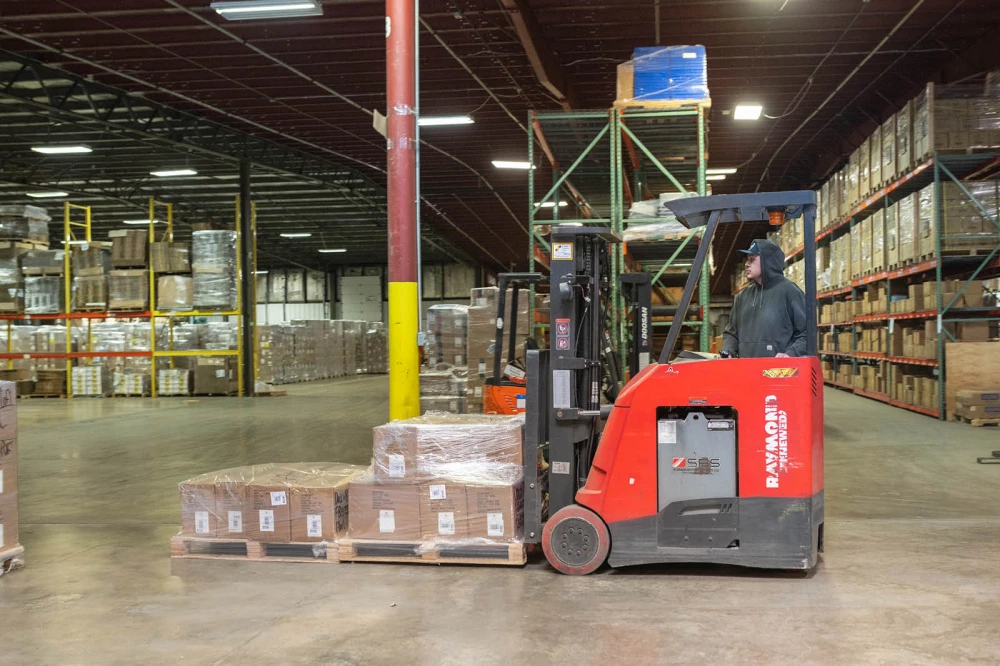
Solid load planning combines accurate picks, clean staging, retailer-specific palletization, and sequencing that matches the ASN exactly. Freight flows from picking to staging to loading without improvisation. Every pallet is validated. Every position is documented. Labels face the correct direction. Load integrity becomes predictable.
Connor explained how it starts early. "When we onboard a client who sells into places like Amazon or Walmart, the process changes depending on where they are selling. We work through all of their routing guide requirements and make sure the warehouse is ready before the first order ever drops." Load planning succeeds because onboarding prepares the foundation.
Load planning gets stressful when retailers accelerate deadlines or inbounds arrive late. Weak operations collapse under this pressure. Strong operations adapt without losing accuracy.
Joel recalled a Target shipment delayed at the ports. "Our supervisor, warehouse manager, and several employees worked the entire day into the night, then came back at 5 a.m. to make sure we had the routing completed." Load planning held firm because the system never fell behind.
Retail load planning is more than Tetris with pallets. It is the difference between smooth retailer relationships and weekly penalty spreadsheets. When your loads ship clean, retailers treat your brand as reliable. When they do not, the fines roll in fast.
If you want load planning that keeps carriers happy and retailers satisfied, reach out to G10. You will get disciplined sequencing, accurate pallet builds, and a team that treats load planning as the core wholesale function it is.
Transform your fulfillment process with cutting-edge integration. Our existing processes and solutions are designed to help you expand into new retailers and channels, providing you with a roadmap to grow your business.
Since 2009, G10 Fulfillment has thrived by prioritizing technology, continually refining our processes to deliver dependable services. Since our inception, we've evolved into trusted partners for a wide array of online and brick-and-mortar retailers. Our services span wholesale distribution to retail and E-Commerce order fulfillment, offering a comprehensive solution.