How Seamless Channel Expansion Protects Growth
- Dec 5, 2025
- Omnichannel

Brands rarely stay in one lane: after Shopify comes Amazon, after Amazon comes Walmart Marketplace, then retail programs appear. Wholesale partners ask for pallets, TikTok Shop lights up, and suddenly the sales map looks like a spiderweb. Seamless channel expansion is the difference between riding that growth or getting crushed by it.
Search trends echo this shift. Operators look up phrases like add new channels without breaking fulfillment, scale into retail from D2C, and connect marketplaces with existing systems. They are not chasing novelty. They are seeking stability while expanding aggressively.
Most early systems are not built for multi-channel life: Shopify runs on its own logic; Amazon and Walmart demand strict data formats; retailers require EDI; while wholesale needs pallets, case picks, and routing guides. The WMS holds a partial version of the truth. This fragmentation creates predictable failures when a brand adds its next channel.
Maureen Milligan hears these stories constantly from new arrivals. She said, "Most of the customers who come to us from another 3PL, their challenges have always been access to their data, order accuracy and efficiency, and basically just meeting the committed requirements." Expanding without foundational structure turns those commitments into constant stress.
Seamless channel expansion only works when all channels plug into one warehouse management system. Not one per channel. One for the whole operation. That WMS becomes the operational brain responsible for inventory truth, order routing, rules, and data synchronization. Every new channel becomes just another data stream feeding the same source of truth.
Connor Perkins described why this matters. He said, "Our clients get best-in-class visibility and transparency. They can see their daily orders, they can see KPIs, and they can see historical transactions." Connected channels only work when visibility extends across all of them.
When a WMS understands only D2C, expansion is painful. When it understands only B2B, marketplaces break. Seamless expansion requires a system fluent in all channel types. It must process retail POs, generate marketplace labels, sync inventory across platforms, and route D2C orders with precision.
Bryan Wright, architect of G10's WMS, explained the difference. "A bad WMS system will not track inventory 100 percent as it should." He also emphasized how native retail capabilities lay the foundation for every channel: "We can create the Walmart-specific shipping label, send them Walmart-specific EDI transaction, pick it in a specific way for Walmart." If the WMS can handle Walmart, Amazon and Shopify are easy additions.
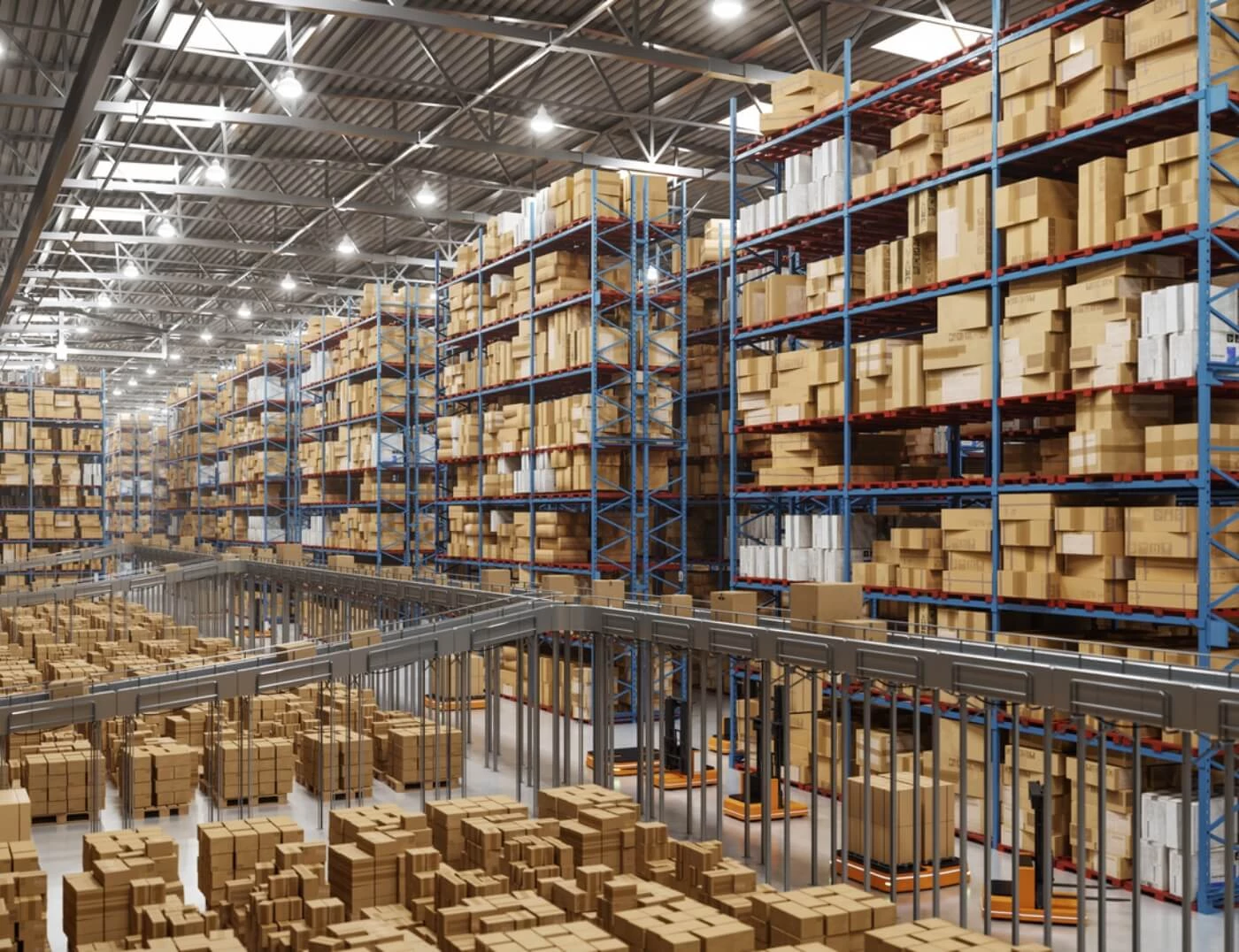
Adding channels increases demand on the warehouse floor. That is where robotics stabilize growth. When pick paths are predictable, expansions stop introducing chaos.
Holly Woods described the automation simply: "The robot is round, it looks like an industrial Roomba." Those robots help ensure that adding a marketplace spike or a new retail program does not overwhelm human workflows.
Many brands make the mistake of creating separate inventory assumptions for each channel. That works for a few months, then collapses under growth. The right model uses one unified inventory pool with rules layered on top. Every channel sees the same stock, reserves its portion, and respects allocations.
Joel Malmquist captured how this works in practice. "We are the ones shipping the orders for these brands," he said, explaining how tracking flows back into Shopify and other platforms automatically. That only works when all channels reference the same inventory truth.
Adding channels is risky when everything depends on improvisation. Seamless expansion needs rule-based operations. Retailers get allocations. Marketplaces get buffers. D2C gets cutoff-based timing. Wholesale gets reservations.
Joel described one of these rule structures. "If an order comes in before noon, we ship it the same day. If it comes after noon, it goes the next day." These rules make multi-channel expansion predictable, not chaotic.
Without visibility, channel expansion feels like a leap of faith. With dashboards, it becomes a measured strategy. Operators see which channels strain labor, which SKUs move fastest, which nodes need replenishment, and where friction begins.
Holly emphasized the importance of connecting data to planning. "We do forecast models, staffing models, and we audit inventory, equipment." Dashboards feed that planning engine.
Channels test operations the same way heavy weight tests a bridge. If the foundation is weak, new channels break it. If the foundation is strong, the system flexes without shattering.
Joel shared a perfect example. A client asked if G10 could handle a scenario where "Target drops 10 POs and gives us 48 hours to turn it around." Joel said, "Yes we can." That confidence comes from a system designed for expansion, not survival.
Expansion should never worsen the customer experience. With proper synchronization, customers across every channel receive consistent speed, tracking, and accuracy. Retail partners see reliability. Marketplace SLAs stay green. D2C customers see fast shipping even during expansion.
Joel explained how aligned communication supports this. "Every single account at G10 has a direct point of contact." That POC sees all channels, not just one, making support unified instead of fragmented.
Moving from D2C into marketplaces or retail can feel intimidating. Routing guides, chargebacks, label rules, and requirements stack up quickly. The right operational partner smooths that learning curve.
Jen Myers sees this constantly. "Someone might be a Shopify brand, so they are only selling D2C, and their path to growth might be to start selling on Amazon next." With proper guidance, that jump becomes an upgrade, not a risk.
Brands that pursue seamless channel expansion share one mindset. They are builders. They expect complexity. They want more retail partners, more SKUs, more marketplaces, not fewer.
Mark Becker summed that mindset up perfectly. "At the end of the day, all we are is builders. The two of us love to build." Seamless expansion is what allows that builder energy to keep moving forward without breaking the operation underneath.
If every new channel feels like a crisis, the problem is not the channel; it is the absence of a unified system built to support expansion. Seamless channel expansion requires three ingredients: centralized inventory, a serious WMS, and rule-based operational logic.
With those in place, your brand can add channels confidently, scale aggressively, and grow without feeling like you are holding your breath. Expansion becomes a strategy instead of a gamble.
Transform your fulfillment process with cutting-edge integration. Our existing processes and solutions are designed to help you expand into new retailers and channels, providing you with a roadmap to grow your business.
Since 2009, G10 Fulfillment has thrived by prioritizing technology, continually refining our processes to deliver dependable services. Since our inception, we've evolved into trusted partners for a wide array of online and brick-and-mortar retailers. Our services span wholesale distribution to retail and E-Commerce order fulfillment, offering a comprehensive solution.