Veria Travel’s Path to Growth
- Feb 5, 2026

Veria Travel began in a dorm room, with early inventory stacked wherever it would fit and the overflow stored under the bed. Carolina Lozano, CEO of Veria Travel, packed and shipped every order herself, not as a temporary experiment, but because the business existed before there was any other way to run it.
She was still in school when the idea took shape. There was no plan for scale, only a rough idea of what might work next; progress came from testing rather than planning.
“We wanted to be an e-commerce brand,” Carolina said later, reflecting on those early days, “but we didn’t understand the niche that we wanted to occupy. Through testing we came to understand the niche, and all the things that we wanted. We saw something in the market that was missing and we wanted to bring that to the table.”
Early inventory lived wherever it fit. Samples and small production runs sat on shelves and in storage bins; when space ran out, product went under her dorm room bed because that was the space she had. The business grew inside the margins of her life, and logistics followed the same rule: whatever worked that day was enough.
“I was on my internship in my dorm, so I used it to ship the products to my place,” she said. “When I needed to ship, I just put it in a UPS box and shipped it myself.”
This worked because order volume was still small. Carolina packed boxes herself, printed labels, and made regular trips to ship orders, which gave her a clear view of what was happening and helped her understand exactly what customers were receiving. As interest in Veria grew, logistics took up more of her time: orders increased steadily, evenings disappeared into packing sessions, and weekends filled with fulfillment instead of planning. Carolina noticed the shift before it became a crisis. The business continued to run, but forward momentum slowed.
Carolina’s first experience with fulfillment outside her dorm room grew out of her own travels. “When I finished high school, I always had the idea I wanted to visit China,” she said. “So I took a six month Chinese language course just to get prepared, and I went to China. I visited Shanghai, some cities in China, and there I started seeing manufacturers and factories.”
That exposure influenced how Veria approached production and logistics from the beginning. The company never experimented with drop shipping; instead, it moved directly from Carolina’s dorm room to a Chinese 3PL. “We never did drop shipping,” she said. “We went from my dorm room to a 3PL in China.”
At the time, the decision was practical. Chinese fulfillment was the lowest-cost option and eliminated the need for Carolina to handle shipping day to day; it did exactly what it was supposed to do: orders shipped, customers received product, and Veria continued to grow. But the distance showed up in the customer experience.
“If you get a 3PL in China, they’re going to handle the fulfillment for you,” Carolina said, “but in terms of customer service and experience, they make an order and then they get a tracking number that says, ‘It’s coming from China.’ It’s just a very different customer experience.”
As distance increased, returns became harder to manage, communication took longer, and visibility faded. Carolina outsourced shipping, but responsibility remained hers; the business still depended on her decisions, and incomplete information made those decisions harder. She knew the next phase required proximity.
Moving fulfillment to the United States marked a shift. Carolina went straight to the largest 3PLs, assuming scale would resolve the problems she had experienced overseas.
“When you start looking for 3PLs in the United States, usually you say, ‘Let’s go to the big brands in the 3PL space,’” she said. “We went with those and experienced challenges.”
Those challenges showed up in two ways: a lack of connection and rising costs. “One is how you don’t feel any connection to your provider,” Carolina explained, “and the other is that they were eating our profits.”
Invoices arrived with charges she did not understand. Fees appeared without warning. “There were things we didn’t understand,” she said, “and then there was a bill with a bunch of stuff on it that was hidden. Literally hidden fees.”
What bothered her most was the lack of clarity around costs. “Transparency is the antidote for mistrust,” she said. “Now I understand whether I’m underpriced or overpriced, but before I didn’t understand the costs coming from my 3PL.”
As Veria grew, those problems compounded. Volume requirements locked the company into rigid pricing structures. Optimization slowed. Flexibility narrowed. “We’re scaling right now; we’re growing; we’re dynamic,” Carolina said. “Many 3PLs have different volume requirements at the beginning, which is a problem if you are a dynamic, growing company.”
Each experience sharpened her criteria: size and reputation mattered less, fit mattered more.
Carolina never defined growth in abstract terms. She measured it daily, asking practical questions about output and correction.
“We never had fixed goals like, ‘I want to ship 500 units today,’” she said. “It was more like, how many orders per day are we shipping? What are we doing wrong? How do I make it right?”
She tracked progress obsessively. “I used to keep a note that said, ‘I want to get to 45 orders per day,’” she recalled. “We made it over 45 orders, and then I wanted to get to 145 orders per day. Next the number has to be more than that.”
She realized that growth depended less on ambition and more on removing friction. “When you have a good 3PL, a real team, you can focus on growth, on marketing, on optimizing the products,” she said. “That’s one of the reasons we decided to go with G10. We were looking for a combination of technology, human resources, and pricing. Pricing is number one, because if the cost doesn’t allow you to scale, something is broken.”
Carolina found G10 through an ad, but the decision came from the conversations that followed. The focus stayed on data, transparency, and flexibility.
“You asked a lot of questions about data,” she said, “and we realized that those three things—price, people, and technology—were doing what we wanted.”
The transition moved quickly. “We were scheduled to go live in one month,” she said. “I told my contact, ‘I want to move this week.’ He said, ‘We don’t know if we can make that happen, but we’ll do our best.’ And they did.”
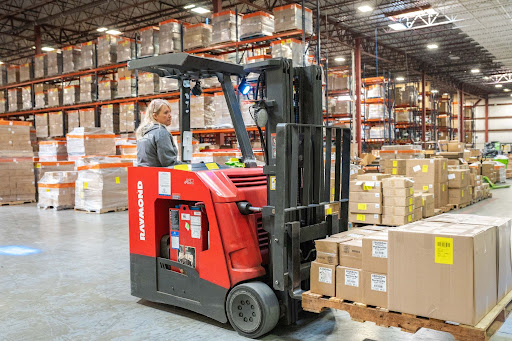
Inventory moved from a 3PL in Texas to a G10 warehouse in Wisconsin while Veria carried a significant backlog. “We had a thousand back orders,” Carolina said. “For G10 it was a rough start because of that. We were moving in a hurry. That was really outstanding.”
From G10’s perspective, that urgency was familiar. Mark Becker, CEO and Founder of G10, described the company’s posture this way: “At the end of the day, all we are is builders. We love to build, and that’s why we don’t sell, that’s why we don’t do this or that, because we just love to build. If I really narrow down why I do what I do, it’s the building.”
That builder mentality shaped how the transition unfolded: constraints were accepted, timelines compressed, and systems adjusted to fit the reality Veria was operating inside.
After the move, the difference appeared quickly. Customers received local tracking numbers. Orders arrived in days instead of weeks. Reviews, repeat purchases, and customer feedback reflected the change.
“It’s different when your customers are getting local tracking information that is coming from Wisconsin and it’s arriving in the next two days,” Carolina said. “Compare that to when my customers got a tracking number and no update for a week. That was horrible customer service.”
The shift mirrored a problem G10 sees often. Joel Malmquist, VP of Customer Experience at G10, described it plainly: “If a customer deals with a really large, big-box 3PL operation, they can get kind of lost in the weeds; they become a cog in the machine. Unless you’re an enterprise merchant, you don’t get that attention. What’s unique at G10 is that every merchant has a direct point of contact. The result is attention to detail and a real commitment to helping them grow.”
Behind the scenes, flexibility mattered just as much as responsiveness. When Carolina first encountered G10’s ChannelPoint™ WMS, it reflected something she hadn’t seen before: a system that could change as quickly as the business it supported. Bryan Wright, CTO and COO of G10, explained why. “With G10 we can configure our system to the customer very quickly because we own the software and the development. When customers need changes, we don’t have to wait in line or pay for custom work; we can make those changes immediately.”
For Carolina, the result was operational quiet. “With G10 we don’t wake up every morning worrying that something negative is going to happen,” she said. “We don’t need to invest a big part of our workday just looking at operations. We can trust G10 to optimize absolutely everything related to logistics.”
Her definition of success shifted with that trust. “Working with G10, my definition of success is teamwork,” she said. “It’s not just one thing; it’s not one player. It’s a big team.”
After moving through every phase, from dorm room to China, from large U.S. 3PLs to G10, Carolina’s view of fulfillment is clear.
“Good fulfillment means a great experience for our customers,” she said. “It’s the service behind the asset you purchase. Yes, it’s the tracking number and delivery, but it also means the product is well-packed, and that we are comfortable as a company.”
Asked to describe G10 in one word, she answered without hesitation.
“Efficiency.”
The path was uneven, but it left Veria Travel in a position Carolina recognizes as sustainable: a company that can grow without constantly revisiting the systems underneath it.
“One day at a time,” she said.
Transform your fulfillment process with cutting-edge integration. Our existing processes and solutions are designed to help you expand into new retailers and channels, providing you with a roadmap to grow your business.
Since 2009, G10 Fulfillment has thrived by prioritizing technology, continually refining our processes to deliver dependable services. Since our inception, we've evolved into trusted partners for a wide array of online and brick-and-mortar retailers. Our services span wholesale distribution to retail and E-Commerce order fulfillment, offering a comprehensive solution.