Your 3PL's Warehouse Management Is Either a Growth Engine or a Tax
- Nov 26, 2025

Growth is supposed to feel like building a snowball, not dragging a cinder block. Yet plenty of COOs and founders step into a new quarter feeling weighed down by something they cannot quite see. Often that weight is the warehouse management system running their 3PL. Research across retail logistics keeps hammering the same message: if the WMS is old, clumsy, or stitched together with guesswork, the warehouse becomes a silent tax on your operation. It chips away at margins, speed, accuracy, and frankly, your sanity.
A good WMS fuels growth. A bad one turns it into friction. You feel that friction in wrong picks, lost inventory, chargebacks, slow onboarding, tired excuses, and dashboards that seem to blink only when something breaks. The warehouse should be the calm center of your operation. Instead, the wrong WMS turns it into a haunted house with barcode scanners.
A weak WMS has a special talent for hiding your own inventory from you. G10 CTO and COO Bryan Wright explains that the difference between good and bad systems begins at the dock door. Bryan says, "A bad inventory system might say, 'Tell me what location you put this product in,' and that is the first time you see it in inventory."
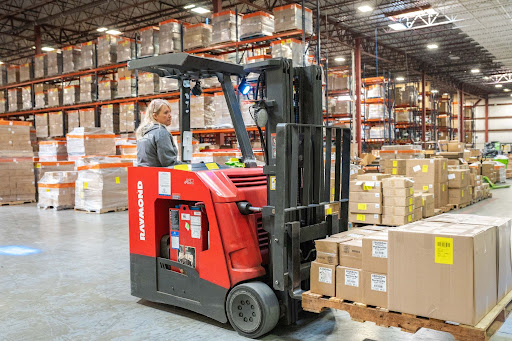
By contrast, he notes, "A good WMS will tell you, 'I have received the product at the dock, now it is on a pallet, now it is on fork 10, and Bobby is driving it,' so at any point in time, you know exactly where that product is."
If you have ever spent a morning searching for a missing pallet, you already know how costly that difference is.
Customers arriving from other 3PLs tell similar stories. Director of Fulfillment Connor Perkins hears it constantly. "One of the pain points our clients have experienced with previous 3PLs is inventory accuracy," he says. "Maybe their previous 3PL was not great at picking the orders accurately. So they were losing money by shipping wrong items or wrong quantities." Connor follows this with a quiet gut punch: "Some have lost product due to storage practices."
That is not a tax. That is a leak in the hull.
Industry research shows that lost units become a growth ceiling long before most founders realize it. Missed SLAs, mis-picks, and missing items damage both revenue and retailer relationships. Every inaccurate shipment lands one more chargeback. Every delayed inbound creates one more stockout. None of this looks dramatic in isolation, but add it up over a quarter and it becomes an invisible tax bill.
Modern fulfillment relies on scan-based accuracy, real-time movement tracking, expiration control, and store-lock logic. If the system cannot keep up, your growth becomes choppy. Connor spells out the core requirement clearly: "You want everything to be scanned in the warehouse, nothing done on paper. You can lose a lot of money in this industry by having people ship stuff wrong, or store it wrong, and now it is lost somewhere."
Expiration tracking matters just as much. In some categories it is the difference between safe and unsellable. Store-lock codes for major retailers matter too, because one wrong shipment to the wrong store can cost a vendor an entire buyer relationship. The WMS either keeps those details straight or it loses the thread.
This is where the research gets blunt: most WMS platforms were only designed to be good at one world. Direct to consumer is simple on the surface. B2B retail is a chessboard full of routing guides, carton logic, pallet maps, EDI files, and picky compliance rules. Very few systems handle both seamlessly.
Bryan Wright explains, "A lot of other people have created D2C software and they are trying to get into the B2B space, and they may not realize the significant amount of effort it takes to be compliant for B2B customers." He contrasts that with the system G10 uses: "Our WMS system was written from day one around B2B, and we have all of those capabilities for our customers."
That foundation is why the system handles D2C so confidently. It grew into it instead of bolting it on as an afterthought.
Research shows that brands start out D2C, get traction, and then pick up retail partners. That is when many WMS platforms crack. They can ship one order to one person, but they cannot ship 600 cartons to Target without breaking into a cold sweat.
VP of Customer Experience Joel Malmquist sees this constantly. "The 3PLs that do well in D2C usually struggle with getting that right on the B2B side," he says. Yet he describes G10 shipping B2B with "over 99.9 percent accuracy" and far fewer chargebacks than he had seen elsewhere.
Director of Operations Holly Woods explains why accuracy matters in real life. When delayed inventory nearly caused a retailer to cancel thousands of units, she says, "Our supervisor and several employees worked that entire day into the night, came back at 5 a.m. to make sure we had the routing completed." The result was a saved PO and an on-time arrival.
A WMS designed for omni-channel makes this possible. A WMS designed for single-channel work tries to guess its way through.
Many 3PLs license generic software that fits everyone poorly. G10 took a different path.
Director of Vendor Operations Kay Hillmann describes it simply: "Our WMS was developed by our chief technology officer. He supervised all the programming previously when he was a software developer." That insider knowledge, she says, means G10 can "tailor the support and technology to the vendor," unlike 3PLs that rely on out-of-the-box software.
Bryan Wright adds the missing detail. His previous company built the WMS, sold it, and deployed it across multiple enterprises before he ever walked into G10. The system is commercial software, not a hobby project. Bryan says, "My company wrote the software," and G10 now benefits from his two decades of expertise, plus the original development team that followed him.
This creates a rare combination: a commercial industrial-strength system backed by the people who know its wiring better than anyone in the country.
It also creates speed. When a customer needs a new integration, Bryan does not open a ticket. He rewires the system. Joel puts it this way: "Brian will build a custom function for a client overnight."
That is not common. That is a growth engine.
Founders live on instinct, ambition, and spreadsheets that never quite tell the full story. A 3PL can either clear the path ahead or turn it into a gravel road. Research across scaling brands shows the same top three concerns: visibility, flexibility, and the ability to grow across multiple channels without reinventing the wheel each time.
Director of Sales Matt Bradbury hears the emotional side of it. "A lot of these brands have had really bad experiences with 3PLs, so there is a big mistrust in the space." He notes that the system G10 uses "is built to be a B2B system as well as D2C," which allows customers to scale without switching tools every year.
Maureen Milligan, Director of Operations and Projects, sees the relief firsthand. "Most customers who come to us from another 3PL say they had challenges with access to their data, order accuracy, and meeting requirements. Suddenly they see their business scaling, the data supports what we agreed to, and the trust begins to build."
COOs care about predictability. Founders care about possibility. A WMS that handles both D2C and B2B, both small orders and massive retail orders, both standard labels and complex lock codes, unlocks both.
A warehouse management system should not slow you down. It should not confuse your team. It should not send you guessing about inventory, labeling, or routing. It should be the part of your business that feels calm, accurate, and boring in the best way possible.
If your WMS feels like friction, you do not have to live with that tax.
Talk to G10 about what a modern, adaptable, industrial-grade WMS can actually do when the original development team is on staff, the compliance knowledge is deep, and the technology is built for both the smallest D2C order and the most complex B2B load.
Let us make your warehouse a growth engine.
Transform your fulfillment process with cutting-edge integration. Our existing processes and solutions are designed to help you expand into new retailers and channels, providing you with a roadmap to grow your business.
Since 2009, G10 Fulfillment has thrived by prioritizing technology, continually refining our processes to deliver dependable services. Since our inception, we've evolved into trusted partners for a wide array of online and brick-and-mortar retailers. Our services span wholesale distribution to retail and E-Commerce order fulfillment, offering a comprehensive solution.