Freight Consolidation and Pool Distribution: Every Question Answered
- Aug 3, 2026

Freight consolidation means combining multiple smaller shipments, often from different origins or different shippers, into a single, fuller truckload before it moves. The logic is simple: a half-empty trailer costs almost the same to run as a full one, so spreading that fixed cost across more freight lowers the price per pallet for everyone riding in it. Think of it as carpooling for pallets. Instead of three separate trucks each running a quarter full, one truck runs three-quarters full, and everyone splits a truckload rate instead of paying individual less-than-truckload (LTL) premiums.
Consolidation isn't a shipping mode on its own; it's a strategy layered on top of existing modes. It can mean combining two partial LTL shipments heading to the same region, aggregating a week's worth of smaller orders into a single trailer, or routing several vendor pickups through a shared facility before one truck carries everything onward.
Pool distribution is a specific, systematic form of consolidation built around geography rather than a one-off combination of shipments. It works in three stages: multiple LTL shipments headed toward the same general region get consolidated at a central point, that combined load moves as a full truckload across the long haul, and once it arrives near its destination region, the shipments get deconsolidated and delivered locally as LTL again. The truckload leg does the expensive long-distance work efficiently; the local LTL legs handle the final, shorter delivery to each individual destination.
The distinction matters because pool distribution is designed for recurring, predictable freight to a defined region, retail store clusters being the classic example, while general consolidation can be a one-time or irregular combination of whatever shipments happen to be heading the same direction on a given week.
Industry benchmarks are fairly consistent on this: shippers moving from individual LTL shipments to a consolidated truckload or partial truckload strategy on qualifying lanes typically save 20 to 40% on that specific freight. Retail-focused consolidation programs, where multiple suppliers pool freight bound for the same distribution center, report similar numbers, often 20 to 30% compared to standard LTL rates, driven almost entirely by higher trailer utilization. One case study of a shipper implementing pool distribution alongside multi-stop truck routing reported freight cost per pound dropping from $0.46 to $0.39, alongside $430,000 in avoided chargebacks from more reliable, predictable delivery windows.
Volume and frequency are the two variables that matter most. A commonly cited threshold is shipping roughly 8 to 12 pallets, or somewhere north of 10,000 pounds, on a single lane within a 48 to 72 hour window; below that, individual LTL shipments are usually simpler and not meaningfully more expensive. Above it, the math tips toward consolidation fairly quickly. The other precondition is regularity: consolidation strategies work best on lanes with predictable, recurring volume, since building a consolidation or pool distribution program around a one-time shipment rarely justifies the coordination overhead.
Usually somewhat, and that tradeoff is the honest cost of the savings. Consolidated freight has to wait at a hub or cross-dock until enough volume accumulates to fill a trailer efficiently, typically a window of 12 to 48 hours, before the long-haul leg even begins. Pool distribution networks are highly predictable once that schedule is set (arrival windows tend to be accurate within about 12 hours), but they're also comparatively inflexible: once freight is committed to a consolidation schedule, changing the timing or destination on short notice is difficult and often costly. Standard LTL, by contrast, ships whenever you're ready and can change destination or quantity right up until pickup, at the cost of a higher per-shipment rate and more handling along the way.
The practical result is that most sophisticated shippers don't choose one model exclusively. A common hybrid approach uses pool distribution or planned consolidation for the bulk of predictable, recurring volume, commonly cited around 70 to 80%, while keeping standard LTL available for the remaining exceptions: rush orders, irregular destinations, or shipments that miss a consolidation cutoff.
It genuinely does both, and the mechanism is the same in each case: fewer touches. A consolidated or pooled shipment typically moves with fewer intermediate stops and terminal handoffs than a standard multi-carrier LTL route, and every handoff a shipment avoids is a chance for damage, a lost pallet, or a delay that doesn't happen. Industry data puts pool distribution's damage and claims rate meaningfully lower than standard LTL, often cited around 0.5 to 1.0% versus 1.5 to 2.5% for LTL, precisely because of that reduced handling. Some consolidation-focused providers report claims reductions of over 60% on freight that moves through a consolidator with standing appointments versus freight that queues through standard LTL terminal networks.
A cross-dock is the physical infrastructure that makes consolidation possible at scale. Freight arrives from multiple origins, gets sorted by destination right there on the dock, and gets loaded onto outbound trailers heading in the same direction, all without ever going into long-term storage. The "cross" in cross-dock refers to freight moving directly from an inbound door to an outbound door, minimizing the time any given pallet actually sits still. This is different from a standard warehouse, where inventory is meant to be stored for a period; a cross-dock's entire value is in moving freight through as fast as possible while still giving it a chance to combine with other freight heading the same way.
A milk run, sometimes called multi-origin or origin consolidation, is a specific consolidation pattern where a single truck picks up smaller shipments from multiple different origins before combining them into one full load, rather than consolidating shipments that are already at a single point. The name comes from the traditional model of a dairy truck making multiple farm pickups on one route before delivering the combined load. It's a useful pattern for a shipper (or a 3PL managing multiple clients) that has several smaller, geographically clustered pickup points feeding the same downstream destination.
Because retail distribution centers pay a real, measurable cost for receiving disorganized, individually arriving LTL shipments from dozens of different vendors, and they've largely stopped absorbing that cost quietly. Consolidated freight arriving from multiple vendors in one truckload is easier and cheaper for a retail DC to receive than the same volume arriving as a dozen separate LTL shipments on staggered schedules. This is a major reason On Time In Full (OTIF) compliance programs at major retailers effectively reward, and sometimes require, consolidated inbound freight: fewer, larger, better-scheduled deliveries are simpler to receive, and retailers increasingly fine or penalize suppliers whose freight doesn't arrive that way.
A meaningful one, and it's the main reason 3PLs are positioned to capture consolidation savings that an individual shipper often can't reach alone. A single brand typically only has visibility into its own freight volume, which may not be enough to reliably fill a trailer on a given lane. A 3PL managing freight across many clients simultaneously can see volume across its entire portfolio, and combine multiple unrelated clients' shipments heading toward the same region into a single consolidated load, something no individual shipper could arrange on its own. This is one of the more underrated arguments for outsourcing freight management rather than negotiating it in-house: the consolidation opportunities aren't just about better negotiating, they require volume most single brands don't have by themselves.
This logic connects directly to warehouse network design more broadly. Holly Woods, G10's Director of Operations, describes exactly this kind of strategic placement thinking on the inbound side: "Inbounding has a lot of nuance. Depending on how big a customer's footprint is, we want to make sure that we can put their products in a place that's good for them strategically." A distributed network with the right regional hubs isn't just about outbound delivery speed to end customers, it's also infrastructure that makes inbound consolidation and pool distribution possible in the first place.
Yes, and the two work together rather than replacing each other. Consolidation determines how efficiently a truck is filled; rate shopping determines which carrier or mode actually moves that consolidated load at the best available price. Bryan Wright, G10's CTO and COO, describes freight as one of several modes folded into the same automated rate comparison used for parcel: "We can shop all the FedEx methods, all the UPS methods, all the USPS methods. We can add DHL, we can add freight, and all of these rate shopping groups can be customized by customer." A consolidated load still benefits from being shopped across available carriers rather than defaulting to a single relationship, the same logic that applies to any other freight decision.
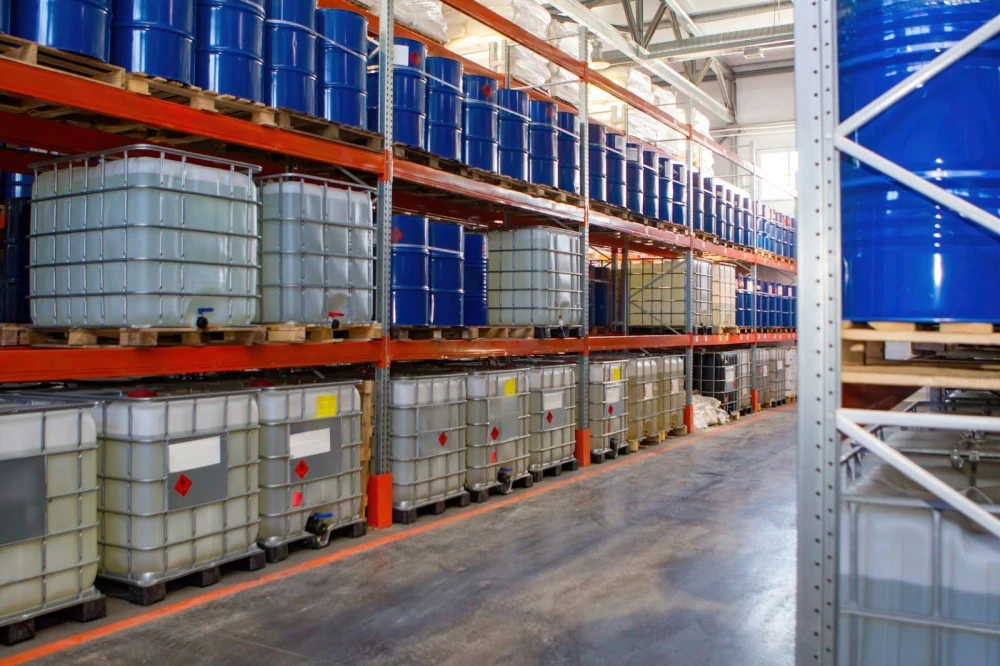
Not as freely, and this is a meaningful exception worth knowing if any part of a product line is regulated. Hazmat freight carries specific weight limits tied to placarding and driver certification requirements that don't apply to ordinary cargo. Kay Hillmann, G10's Director of Vendor Operations, describes this constraint directly for a Class 3 hazardous material: "Unless you have specific placards on the trailer, and a driver who is again certified to ship that product and handle that product, you can only do a thousand and one pounds of that on a trailer." That kind of hard ceiling limits how much hazardous freight can realistically be combined into a single consolidated load, regardless of how much total volume theoretically exists to fill a trailer. Consolidation strategies built for ordinary freight generally need a separate plan, and often a separate certified trailer, for anything hazmat-classified.
LTL-to-FTL consolidation is the more general case: combining enough LTL volume on a single lane to justify booking a dedicated truckload instead, whether that volume comes from one shipper's own freight or multiple shippers' combined freight. Pool distribution is a specific implementation of that same idea, built around a defined pattern: consolidate toward a region, run one efficient long-haul leg, then deconsolidate for local delivery to multiple final destinations within that region. Every pool distribution program involves consolidation; not every consolidation strategy is structured as pool distribution. Pool distribution is the more specialized tool, particularly well suited to a shipper delivering to many locations within the same metro or regional cluster, like a retailer with dozens of stores in one area.
Start with a lane-level audit rather than guessing. For each regular origin-destination pair your business ships, look at how many shipments move weekly and what their combined weight typically runs. Lanes that consistently clear roughly 10,000 pounds or several pallets within a short window, several times a week, are strong consolidation candidates. Lanes that ship occasionally, in small quantities, or to inconsistent destinations usually aren't, and forcing consolidation onto irregular freight tends to create coordination overhead without capturing meaningful savings. This is exactly the kind of analysis a 3PL managing freight across many lanes and many clients is positioned to run more easily than an individual shipper looking only at its own shipment history.
Often yes, specifically because a 3PL or freight consolidator can combine your freight with other shippers' freight heading the same direction, something you can't arrange by yourself. This is the core value proposition of using a 3PL or dedicated consolidator for freight rather than booking LTL directly with a carrier: your individual volume doesn't need to independently justify a truckload, because it's being combined with volume from other shippers on the same lane. A brand shipping a modest, steady volume to a single region can access truckload-style economics through a consolidator's aggregated freight even though its own shipments alone would never fill a trailer.
Ask specifically whether they run lane-level volume analysis across their full client base, not just your account in isolation, since that portfolio-wide visibility is exactly what identifies consolidation opportunities an individual shipper's own data can't surface. Ask what percentage of your regular freight currently moves through consolidated or pool distribution arrangements versus standard individual LTL, and ask how consolidation decisions get made, on a fixed weekly schedule, or dynamically as volume accumulates. A partner running genuine consolidation should be able to name specific lanes where it's already happening for your freight, not describe the concept in the abstract.
Transform your fulfillment process with cutting-edge integration. Our existing processes and solutions are designed to help you expand into new retailers and channels, providing you with a roadmap to grow your business.
Since 2009, G10 Fulfillment has thrived by prioritizing technology, continually refining our processes to deliver dependable services. Since our inception, we've evolved into trusted partners for a wide array of online and brick-and-mortar retailers. Our services span wholesale distribution to retail and E-Commerce order fulfillment, offering a comprehensive solution.