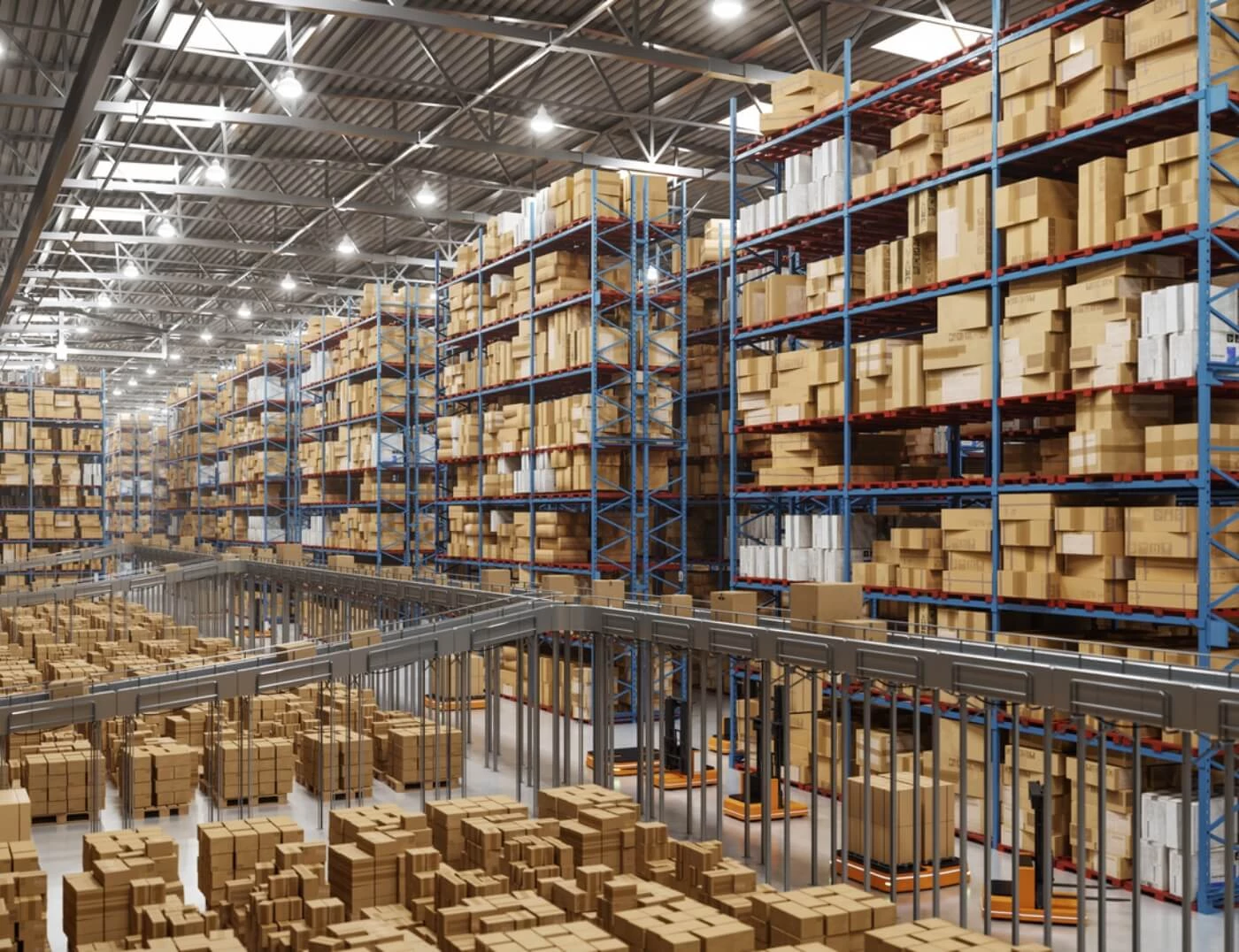
Micro-Fulfillment Robotics: When Small Footprints Need Big Throughput in 3PL Operations
- Feb 10, 2026
- Autonomous Robots

Micro-fulfillment robotics usually comes up when a brand wants fast shipping from a smaller footprint, often closer to customers. The logic is simple: shorter shipping zones can mean faster delivery and lower parcel costs. The reality is less simple, because small sites can run out of space and run out of time at the same moment.
In a tight footprint, every inefficiency gets louder. A few extra steps per pick can turn into a line at packing. A small receiving delay can turn into inventory not being available when orders drop. Micro-fulfillment robotics matters because it can reduce travel, tighten handoffs, and keep flow steady when you do not have extra square footage to hide problems.
Micro-fulfillment robotics is not a single gadget that fixes the warehouse. It is the use of robots and automation to increase throughput per square foot, while keeping accuracy and service levels intact. In practice, that often looks like robots moving work to people, sequencing tasks, and reducing the time spent walking and searching.
The goal is not to turn a small facility into a science project. The goal is to make a small facility behave like a larger operation in the ways that matter: steady output, predictable cutoffs, and low error rates. When that happens, micro-fulfillment can support fast delivery promises without requiring a giant building.
In a micro-fulfillment setup, travel time can still be a major cost, even if the building is smaller. That is because order profiles are often high-SKU and low-quantity, which means lots of stops. If travel is not controlled, the team spends the day walking and the station output stalls.
Holly Woods, Director of Operations, describes the practical impact of movement automation: "The robots are allowing efficiency with pick paths. They are lowering fatigue on employees." In a smaller footprint, fatigue can be even more punishing because there are fewer people to absorb spikes. Reducing unnecessary movement keeps the pace steadier and protects the last hour of the day, when cutoffs are looming.
Woods also explains how zoning creates predictable handoffs that scale without extra space: "If my zone is one, I know I will stay within aisles one, two, and three, and the cart will come to me. When my zone is done, the cart continues on to another employee." That kind of structured handoff keeps work organized, even when the building is tight. It also reduces the chance that carts and totes become physical clutter that blocks flow.
Micro-fulfillment is often sold as a speed story, but the real story is flow. If packing stations run dry, pickers wait. If packing stations get flooded, cartons pile up and errors rise. Micro-fulfillment robotics helps when it keeps the right amount of work moving to the right station at the right time.
Flow depends on sequencing and prioritization. When the system can sequence work, the day stays calmer, and calm matters because calm protects accuracy. In micro-fulfillment, you do not have space for chaos, so controlling flow is not optional.
Tight footprints can increase the risk of mistakes because locations are denser and staging space is limited. When cartons and totes stack up, people grab the wrong thing, skip verification, or rush to clear space. Micro-fulfillment robotics supports accuracy by reducing congestion and by keeping work organized through predictable handoffs.
Connor Perkins, Director of Fulfillment, describes the pain brands often bring from previous providers: "One of the pain points our clients have experienced with previous 3PLs is inventory accuracy. Maybe their previous 3PL was not great at picking orders accurately. They were losing money by shipping wrong items or wrong quantities of items." In a micro-fulfillment environment, those losses can escalate quickly because there is less buffer time to recover. Robotics helps when it reduces the conditions that cause mistakes, but verification controls still have to be enforced.
Accuracy is also the hidden cost driver. A small site can ship fast and still lose money if it ships wrong. Returns and reships do not care that the building was small.
Micro-fulfillment is often built around faster delivery and later order cutoffs. That makes same-day shipping a natural goal, but it also makes the operation less forgiving. If inbound is late or picking gets congested, the window to recover is small.
Perkins captures why brands cannot tolerate slow fulfillment anymore: "I hear a customer say a previous 3PL took three days from when the order was placed to when they would ship it. That is not great if you are trying to compete in this industry right now." Micro-fulfillment robotics helps protect same-day performance by keeping work flowing steadily and by reducing last-minute scrambling. It also supports reprioritization so urgent orders do not get buried behind less urgent work.
Same-day also magnifies the cost of exceptions. When the workflow is organized and predictable, exceptions are easier to spot and resolve without stopping the whole line.
Robots do not create truth on their own, and micro-fulfillment has no patience for guesswork. You need a warehouse management system that can track inventory, assign tasks, and record every touch. Without that foundation, robotics can move the wrong work faster, which looks productive until customers complain.
Bryan Wright, CTO and COO, explains the foundation: "A good WMS tracks inventory through the warehouse at every point that you touch it." That tracking matters even more in micro-fulfillment because inventory is often replenished in smaller, more frequent cycles. Wright also explains what traceability looks like in practice: "We have portals that show you the data. We have history that shows you all of that tracking. It shows the product landed on the dock at 8 o'clock."
When the tracking history is real, micro-fulfillment improves over time. Leaders can see where bottlenecks form, where errors originate, and what changes improve throughput without raising risk.
Micro-fulfillment is often used for channels where customers ask more questions, because delivery expectations are higher. If customers cannot see what is happening, they contact support. If brands cannot see what is happening, they cannot plan promotions, replenishment, or customer communication.
Maureen Milligan, Director of Operations and Projects, explains why transparency matters: "What these real-time portals provide our customers is 100% visibility." Visibility reduces status-chasing and keeps interruptions off the warehouse floor. Fewer interruptions protect throughput, which is a major advantage in a small site where every interruption creates a bigger ripple.
Visibility also creates accountability. When everyone can see what happened and when, the conversation shifts from guessing to improving.
Micro-fulfillment robotics tends to fit best when fast delivery zones matter, when order profiles are small and frequent, and when space is expensive. It can also be valuable when a brand wants geographic redundancy, because smaller sites can be deployed as part of a network rather than as a single mega-facility.
That said, micro-fulfillment is not always the cheapest option. The business case depends on the value of speed, the cost of space, and the stability of demand. If your order volume is highly seasonal, you need a plan for how the system scales up and down without wasting capital.
Micro-fulfillment robotics is not a shortcut around fundamentals. It does not fix inaccurate item data, unclear packaging rules, weak receiving discipline, or inconsistent training. If those inputs are wrong, robotics will surface the weakness faster because it increases tempo in a small space.
It also does not eliminate exception handling. Damaged cartons, mixed cases, and special kitting needs still require human judgment. The best micro-fulfillment setups design clear exception workflows so the mainline flow does not collapse.
If a 3PL says they offer micro-fulfillment robotics, ask what they measure and what changed after deployment. Look at throughput per square foot, on-time shipping, cutoff hit rate, order accuracy, inventory accuracy, and time to resolve exceptions. Ask how these metrics behave during peak weeks, because peak is where small sites either shine or struggle.
Milligan connects automation investment to measurable improvement: "We've seen fabulous results, a huge increase in productivity." Productivity should be paired with accuracy because speed without accuracy is just faster rework. Ask how verification is enforced, how replenishment is handled, and what visibility you get day to day.
Finally, ask how the operation adapts when your business changes. New SKUs, new packaging rules, and new channels arrive quickly, and micro-fulfillment should not depend on constant reconfiguration to keep up.
Micro-fulfillment robotics can be a practical advantage when you need high throughput in a small footprint and when delivery speed is part of your customer promise. It works best when robots reduce travel, the WMS tracks every touch, and verification is routine. When those pieces fit together, small sites can deliver big performance without becoming chaotic.
If you are evaluating providers, focus on outcomes you can measure. Ask how micro-fulfillment affects throughput per square foot, accuracy, and same-day cutoff performance, then choose the operation that can explain results with data and repeatable process.
Transform your fulfillment process with cutting-edge integration. Our existing processes and solutions are designed to help you expand into new retailers and channels, providing you with a roadmap to grow your business.
Since 2009, G10 Fulfillment has thrived by prioritizing technology, continually refining our processes to deliver dependable services. Since our inception, we've evolved into trusted partners for a wide array of online and brick-and-mortar retailers. Our services span wholesale distribution to retail and E-Commerce order fulfillment, offering a comprehensive solution.